Holiday Guide · Bali Culture
Galungan & Kuningan in Bali – Meaning, Traditions, and Our Holiday Schedule
Galungan and Kuningan in Bali are two of the island’s most important religious celebrations. During these days, Balinese Hindus focus on balance, gratitude, and harmony. In addition, the atmosphere around Nusa Dua becomes calmer and more spiritual, giving visitors a chance to see local culture beyond the beaches and shopping streets.
Spa Holiday Notice – Closed on 18–19 November 2025
During Galungan and Kuningan, our team at Nusa Dua Spa by Lily Treatment also joins the family ceremonies. For this reason, our spa will be closed on:
- Tuesday, 18 November 2025 – Galungan Day
- Wednesday, 19 November 2025 – Galungan & Kuningan period
We reopen as usual on 20 November 2025. Therefore, if you plan to enjoy a treatment before or after the holiday, we recommend booking in advance, especially for couple rooms and evening sessions.
What Is Galungan?
In simple terms, Galungan celebrates the victory of dharma (light, harmony, and goodness) over adharma (darkness and imbalance). Balinese Hindus believe that, during this time, ancestral spirits visit their families. As a result, people prepare their homes and family temples with care, prayer, and beautiful offerings.
For travellers, Galungan offers a rare chance to see daily life in Bali from a different angle. The streets feel calmer, the temples feel more active, and many local families move with a slower, more mindful rhythm. You will notice that the island does not only entertain guests; it also protects its deep spiritual roots.
Even when you stay in the resort area of Nusa Dua, this celebration surrounds you. You may see small shrines near the road, decorated with flowers and incense, or staff members in traditional clothing on certain days.
Why Do You See So Many Penjors?
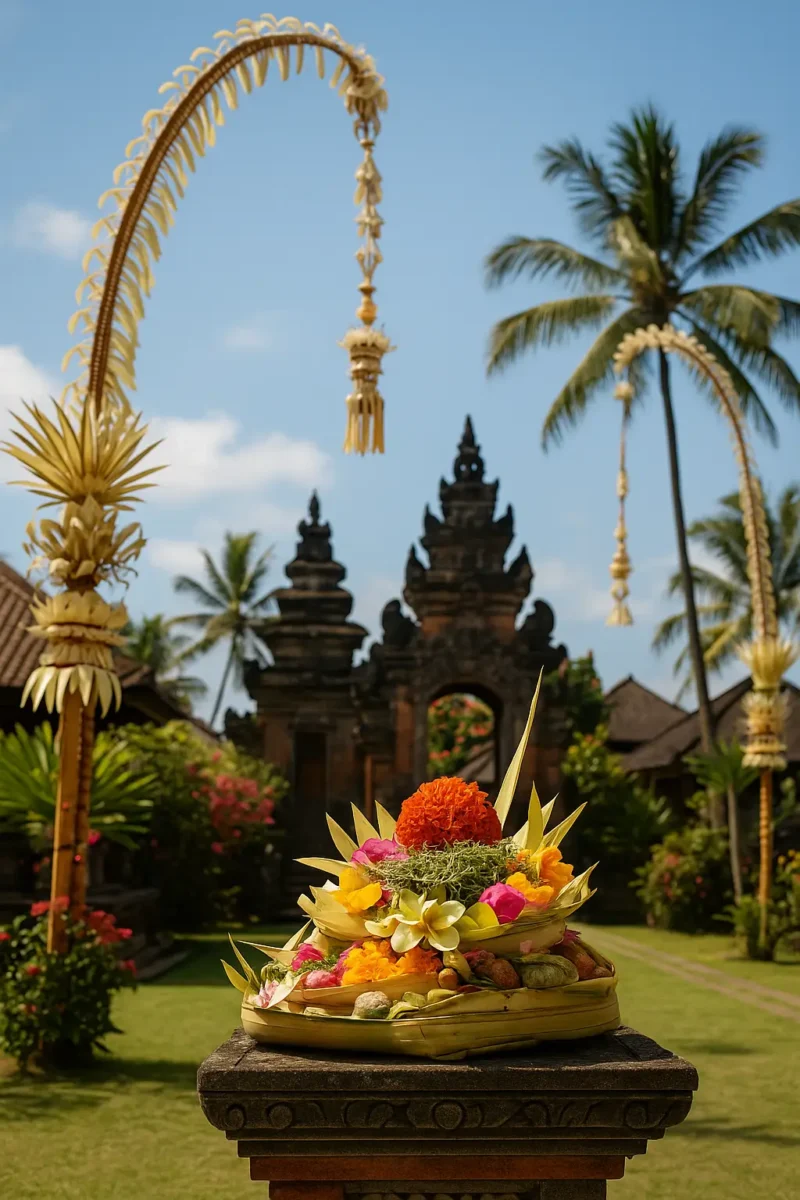
One of the most eye-catching sights during Galungan is the row of tall bamboo decorations along the streets. Balinese people call these decorations penjors. Each family creates its own penjor and decorates it with coconut leaves, rice grains, flowers, and small woven ornaments.
A penjor represents gratitude, natural abundance, and a prayer for blessings over the household. In addition, it shows respect for the harmony between humans, nature, and the divine. When you drive through Nusa Dua, Tanjung Benoa, Uluwatu, or Ubud and see penjors curving over the road, you are looking at a living symbol of this harmony.
In the evening, some penjors glow softly under warm lights. This gentle light, combined with the sound of distant temple bells, creates a peaceful scene many guests remember long after they return home.
How Balinese Families Celebrate
Galungan does not stand alone as a single day off. Instead, it belongs to a series of days, and each day has a role. The period ends ten days later with Kuningan. To help you understand what happens around you, here is a simple overview:
- Penyekeban – Families store green bananas so they ripen in time for offerings.
- Penampahan – People prepare special ceremonial dishes and offerings. This day feels busy in Balinese kitchens and markets.
- Galungan Day – Families dress in traditional attire, visit temples, and pray at their family shrines. Many businesses adjust their hours so staff can attend ceremonies.
- Manis Galungan – The mood becomes lighter. Families visit relatives, share food, and sometimes take short trips together.
- Kuningan – Ten days after Galungan, families hold another round of offerings. They believe that ancestral spirits return to the heavens on this day. Yellow rice and special decorations appear in the offerings as a sign of gratitude and protection.
If you decide to visit a temple during these days, you can show respect by wearing a sarong and sash, following the guidance of local staff or guides, and moving calmly. In many cases, a simple smile and a quiet presence already show that you honour the ceremony.
What You Can Experience in Nusa Dua During Galungan
Although Nusa Dua is known as a resort area, local culture still lives very close to the hotels and shopping streets. During Galungan and Kuningan, you may notice several small but meaningful changes around you.
- Hotel entrances decorated with penjors and fresh flower offerings.
- Staff in traditional Balinese clothing on certain days of the celebration.
- Small family temples near the main roads, filled with incense smoke and colourful offerings.
- A slightly quieter rhythm in local neighbourhoods as people focus on prayer and family time.
A relaxing session at our spa—either before Galungan or after we reopen—can complement the peaceful holiday atmosphere you’ll see throughout Bali.
Relaxing Before or After the Holiday
Many travellers like to balance cultural activities with a moment of quiet relaxation. Before Galungan or once we reopen after the holiday, you may enjoy:
- A traditional Balinese massage in Nusa Dua to release travel tension and jet lag.
- One of our curated spa packages in Nusa Dua for a complete half-day of pampering.
In this way, you can enjoy both sides of your Bali holiday: the deep culture of Galungan and the calming space of a professional spa treatment in a private room.
Book Your Treatment Around Galungan & Kuningan
Our team will be ready to welcome you before 18 November or after we reopen on 20 November 2025. For the best availability, especially for couple rooms and evening schedules, we suggest that you reserve your preferred time in advance.
💬 Book via WhatsApp: +62 878 6427 2239